Our Projects

Niger Delta Forests For Life

The Niger Delta Forest for Life NAMA Support Project (NDFL NSP) is a climate change adaptation and mitigation project on community-based land use planning, protecting forests and biodiversity across the Niger Delta.

NDFL NSP

What is the Forest for Life NAMA Support Project?

Niger Delta Forest for Life NAMA Support Project – NDFL NSP, is a climate change adaptation and mitigation project on community-based land use planning to create conservation areas to protect forests and biodiversity value areas. We support smallholder farmers, fishermen, rural households and communities who are the critical beneficiaries and agents at protecting biodiversity in the rainforests, coastal mangroves, its river basins and watersheds, and support the inhabitants by developing their management capacity and sustainable economic alternatives.

The objectives of the Niger Delta Forest for Life NAMA Support Project are to support the local communities on land use planning and to build the capacity of local indigenous communities to manage forest biodiversity and conservation of critical ecosystems.

Project impact: Protecting biodiversity, adapting and mitigating the impact of climate change through Community-based Forest Management, Deforestation-Free Supply Chains, Coastal Areas Management, and ICT in forest management with cloud-based monitoring systems.

Outcomes: To pilot and upscale NDFL NSP to protect 25,000 ha of high carbon value forest and biodiversity corridors in the Niger Delta within the Lower Guinea biodiversity hotspot.
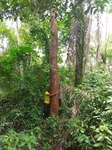
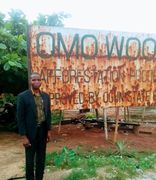
CECD community meeting CECD field visit
Demonstration Pilots

Project Implementation

Demonstration pilots in three communities across the Niger Delta.

Iyasan Community Forest

Community Forest Management pilot project covering 5,200 ha of high carbon value forest and biodiversity corridors.

Ogbodogbo Irele Wetland

Wetland Conservation Area of 1,292 ha protecting freshwater ecosystems and watersheds.

River Otu Corridors

Conservation corridor of 5,000 ha linking critical habitats and carbon sink landscapes.

Legunmare Cocoa & Forest

20 ha of high biodiversity forest protected around cocoa farms through agroforestry livelihoods.

Strategies

  • Grassroots mobilisation for forest conservation, capacity building, awareness and education outreach.
  • Management of existing tropical forest reserves and national parks.
  • Identification of conservation interest areas and endangered species of flora and fauna.
  • Working with communities to identify land use potential corridors and restoration areas.
  • Promoting renewable, sustainable value-added economic opportunities for rainforest inhabitants.
  • Opening community participatory conservation pilot schemes and networks of community protected forests.

Support Our Project

To protect forests and save the climate and biodiversity, the greatest frustration when visiting our rainforest rural communities is the high level of forest fragmentation and degradation. This situation has impaired agricultural yields, in some areas leads to polluted water courses and loss of useful native species of plants and animals.

Rainforests are being destroyed for the fertility of their shallow top soils that vanish rapidly and the little profit it yields for timber. The solution lies in educating the natives and by providing markets for its renewable and sustainable resources.

We seek out capital and opportunities to partner with organizations that have the funds while we provide technical expertise, to create a regional MRV system for cloud-based information and management of rainforest and coastal shoreline resources in Nigeria – reviving and expanding community-based forestry schemes which ensure more rational use of rainforest and marine resources, foster better regional conservation of wildlife and sustainable income in our rural communities.

Support This Work
Water & Livelihoods

Global Water Network Nigeria (GWNN)

An initiative of CECD aimed at promoting a comprehensive approach to community environmental health, sanitation and water resources management — in support of Nigeria's water quality management programme.

Why GWNN

There remain over one billion people without access to an adequate water supply and 2.4 billion who lack basic sanitation, leaving millions to die every year from otherwise preventable water-related diseases — and the largest percentage of them are African. Our rural populations lack access to portable water, especially women and children.

The water problem of Nigerians, especially in the Niger Delta, is centred on quality. Oil drilling and other human activities often pollute the water supply system; oil spillage is frequent, polluting streams and underground water, while many communities get their water from wells, rivers and stagnated streams.

The primary geographical focus of GWNN is the nine states that make up the Niger Delta of Nigeria — about 3,000 long settled communities, 112,000 square kilometres, and a population of about 27 million people — the hub of the hydrocarbon industry in Africa.

Objectives & Action Plan

  • Provide water quality monitoring, sanitary and forest conservation education in schools and communities.
  • Organise community forums to enlighten communities that share common water sources.
  • Assist targeted schools and communities in provision of drinking water, sanitation, forest conservation, watershed management and water quality monitoring.
  • Work with River Basin Development Authorities to create water quality awareness in local communities and schools.
  • Partner with local communities to develop portable drinking water projects.
  • Develop green school projects and education and sensitisation programmes in primary, secondary and tertiary institutions.